

Find inner peace
Cultivate the spirit, develop inner-wisdom, and choose wise actions.
SOTAESAN
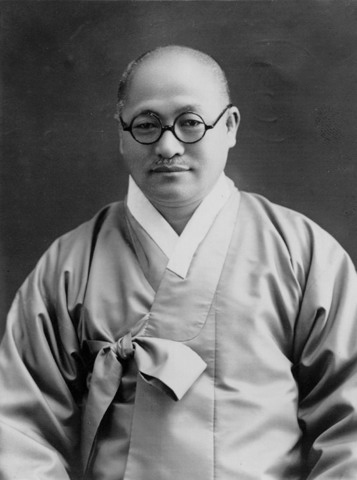
Park, Chung-bin (1891-1943), better known as Sotaesan, was born on May 5, 1891 in Korea. Sotaesan began his quest to understand the fundamental principles of the universe and human life at an early age. Looking up at the sky, he wondered, “How is the sky so high and wide? How can clouds and storms appear from such a clear
sky?” Sotaesan questioned anything he encountered in his life at that time, including his own existence. Even his family members—parents, brothers, and
sisters—all served as models for spiritual questions. The more he became engrossed in questions, the more Sotaesan became committed to finding answers.
Searching Outside (1901-1911)
At the age of eleven, Sotaesan heard of a traditional folk legend in Korea at the time of an all-knowing mountain spirit. He thought that if he could meet this spirit, he would find the answers to all of his questions. It is said that Sotaesan often hiked
four kilometers from his home into the mountains to offer prayers to the mountain
spirit, but, despite his untiring dedication, it never appeared.
When he was sixteen, Sotaesan was inspired by a story about a man who had his wishes fulfilled upon meeting an enlightened teacher. He gave up his quest for the mountain spirit and began to look for a spiritual teacher. Whenever he saw a
stranger or a beggar, he tested them. Sometimes he even invited them to his house to see if they might be a teacher in disguise.
Sotaesan’s search for a spiritual guide came to an end when his father, a great supporter of his spiritual journey, passed away in 1910. This was a turning point in his life. After becoming the head of his household, it was expected that Sotaesan would provide for his family
When Sotaesan gave up on finding a teacher, his inward search reputedly began with one thought: “What shall I do?” He dwelled on that question for years, from
morning till night. Then, one day, that singular, all-consuming worry vanished and Soteasan entered a state of deep samadhi (meditative consciousness). During this
ascetic practice, it is said that he sat in great calmness as his health began to deteriorate and strange blotches appeared all over his body. His neighbors and family grew concerned, and regarded him as a living corpse.
On April 28, 1916, as dawn broke the darkness of night, Sotaesan’s mind and heart opened, and all of his previous questions were resolved with perfect clarity. At the age of 26, it is said that Sotaesan awakened to the truth.
Full of energy, Sotaesan asked his neighbors for the primary scriptures of
Confucianism, Buddhism, Taoism, and Christianity so that he could study them.
After extensive reading, he said, “That which I have known has already been known
by the ancient sages.” He continued, “Shakyamuni Buddha is truly the sage of sages. Though I’m awakened without any teacher’s guidance, I realize that many things coincide with the words of the Buddha. I will take the buddhadharma as the
central tenet of my teaching.”
However, after reflecting on Buddhism and the societal needs of the time, Sotaesan felt that the buddhadharma needed to be restructured to be accessible and
practical for everyone.
Many people began to gather for Sotaesan’s teachings, soon considering him to be a living buddha. According to accounts, the first thing he taught his disciples was “diligence and thrift” to help poor villagers establish a savings association. When sufficient funds had accumulated, he and nine core disciples began constructing a dam on riverside tidal land in Kilyongri, turning it into a rice field. They repurposed the muddy embankment into twenty-five acres of fertilized land, which became the economic basis of the Won Buddhist Order.
Building the Community to Share the Buddhadharma (1920-1942)
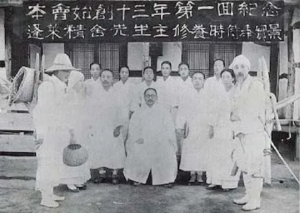
As the community grew, Sotaesan decided in 1924 to establish the general headquarters in Iksan, South Korea, which is easily accessible from all directions within the country and spacious enough to accommodate the needs of the community. In the same year, Sotaesan and his disciples had the first general assembly for the founding of the Buddhadharma Research Society, which was the name of the community until the Second Head Dharma Master Chongsan renamed it in 1947 as Won Buddhism.
This community was developed based on Sotaesan’s vision to make the
buddhadharma practical, useful, and beneficial to all sentient beings so that all
practitioners could attain awakening in their daily lives
Entering Nirvana (1943)
On June 1, 1943, after 28 years of delivering the dharma, Sotaesan passed away in Iksan. A year before his passing, Sotaesan finished writing the Principal Book of Won Buddhism.